
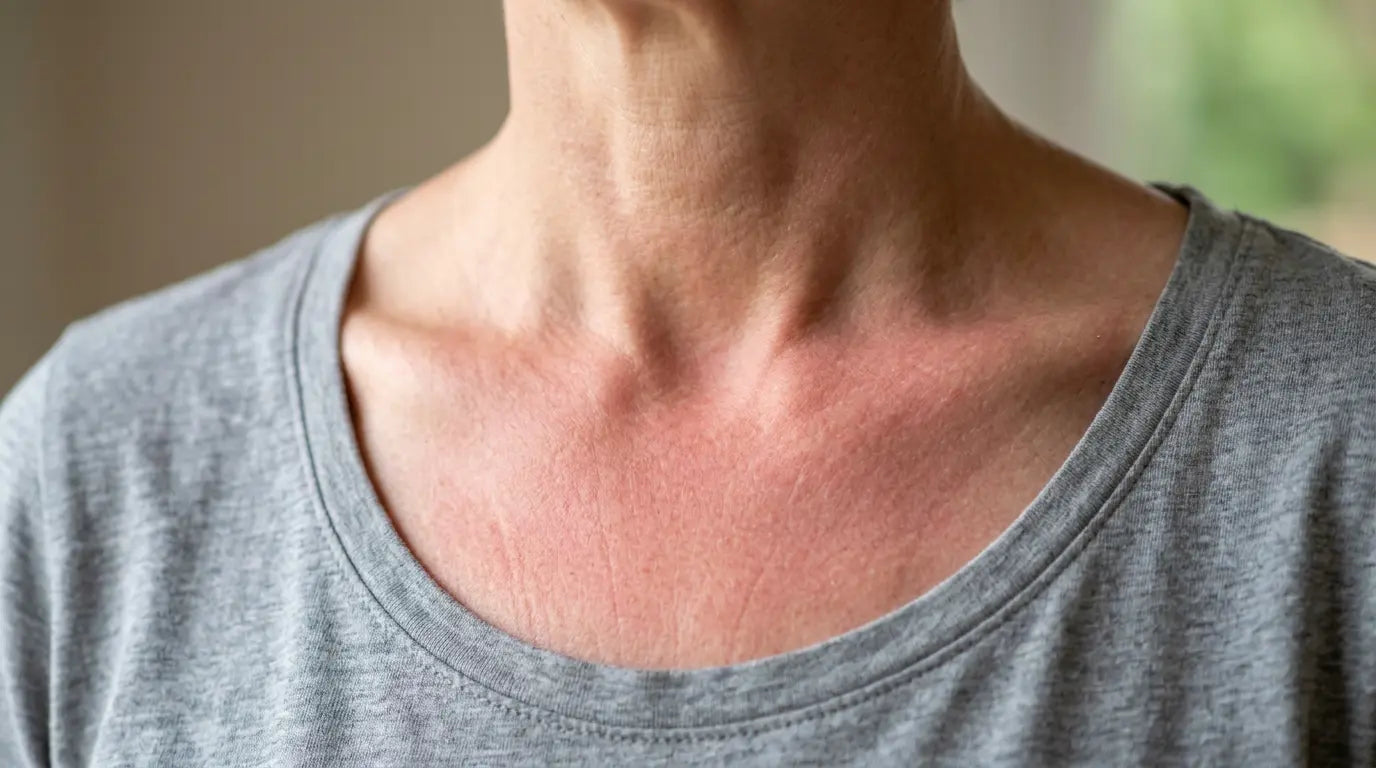
The main types of alcohol skin reaction
Yes, you can get a rash from drinking alcohol, and skin reactions to drinking are not all the same. Recognizing which one you have is the first step to understanding it.[1]
Hives (urticaria)
Hives are raised, itchy welts that can vary in size and appear suddenly after drinking. They may fade within a few hours or linger longer. Alcohol-induced hives are usually linked to histamines or sulfites in the drink, or to the histamine your own body releases as it processes alcohol.[1]
Flushing
Flushing is the warm reddening of the face, neck, and sometimes chest that comes on soon after drinking. It is driven by acetaldehyde buildup and is the hallmark of the genetic ALDH2 difference. We cover this fully in our guide to why your face turns red when you drink.
Contact-type irritation
Less commonly, the skin can react to direct contact with an ingredient in the drink, producing localized redness and itching where contact occurred.[1]
What causes an alcohol rash?
Most alcohol rashes trace back to one of these:
Histamine
Alcoholic drinks, especially red wine and beer, contain histamines produced during fermentation. If your body does not break histamine down efficiently (histamine intolerance), drinking can trigger hives, itching, flushing, and congestion.[3] On top of that, acetaldehyde, the byproduct of alcohol metabolism, can directly stimulate the mast cells in your skin to release even more histamine, which is why flushing and itching often go together.[3]
Sulfites
Sulfites are preservatives found in most wine and some beer. In people with sulfite sensitivity, they can trigger itching, flushing, and occasionally hives. Wine contains some of the highest sulfite levels of any common drink.[3]
Acetaldehyde buildup (the genetic link)
If you carry the less active ALDH2 enzyme variant, acetaldehyde accumulates when you drink. Because acetaldehyde prompts histamine release in the skin, this genetic difference can produce not just flushing but hives and an alcohol rash too.[3]
A reaction to another ingredient
Sometimes the trigger is a grain, grape, yeast, or preservative in the beverage rather than the alcohol itself. This is why a person can react to wine or beer but be fine with a clear spirit.[1]
How to tell what your reaction is
A few simple patterns help you narrow it down:
- Worse with wine and beer than spirits? Histamine intolerance or sulfite sensitivity is more likely, since wine and beer carry more of both.[3]
- Flushing that starts on the face and spreads down? That predictable pattern points to the genetic ALDH2 form of intolerance.[1]
- Raised welts, localized swelling, or a widespread rash that does not follow the flush pattern? That is more typical of an allergic-type reaction, and worth discussing with a doctor.[1]
- Reaction to one specific drink or brand but not others? Points to a specific ingredient rather than alcohol in general.[1]
Alcohol rash vs a true alcohol allergy
This distinction matters. An alcohol intolerance is a metabolic issue that produces uncomfortable but generally not dangerous skin reactions like flushing and mild hives.[2]
A true alcohol allergy is an immune-system reaction, and it is rare. When it happens, it can be more serious, so it is a meaningful distinction. More often, what feels like an alcohol allergy is actually a reaction to an ingredient like sulfites, grains, or preservatives.[2]
How long does an alcohol rash last?
It depends on the type. Hives from alcohol often appear suddenly and can fade within a few hours as your body clears the trigger, though they sometimes persist longer.[1] Flushing typically settles within an hour or two after your last drink. If a rash lasts for days, keeps returning, or is severe, that is a reason to see a professional rather than wait it out.
What to do about an alcohol rash
If your reactions are mild, these steps help you manage and reduce them:
- Identify and avoid your trigger. If wine or beer reliably causes it but clear spirits do not, histamines or sulfites are the likely culprit, and switching drinks may help.[2]
- Drink less and more slowly. Less alcohol means less acetaldehyde and less histamine release.
- Stay hydrated and eat before drinking to slow absorption.
- Over-the-counter antihistamines may relieve mild symptoms, according to Mayo Clinic, though it is worth talking to a provider before combining any medication with alcohol.[2]
- Pay attention to severe or persistent reactions. If a rash is severe, keeps coming back, or is new for you, that is worth looking into rather than ignoring.
One honest note: if the cause is the genetic ALDH2 form, the tendency does not fully go away, because your body will always process alcohol the same way. Managing it comes down to knowing your triggers and moderating your intake.[2]
Keep reading
References
- Cleveland Clinic. "Hives (Urticaria): Causes, Symptoms & Treatment." Hive triggers, histamine, duration, and management. my.clevelandclinic.org
- Mayo Clinic. "Alcohol intolerance: Symptoms and causes." Histamines, sulfites, allergy vs intolerance, and triggers. mayoclinic.org
- Kawano T, et al. "Acetaldehyde Induces Histamine Release from Human Airway Mast Cells." International Archives of Allergy and Immunology. 2004;134(3):233-239. DOI: 10.1159/000078771. karger.com


,%20flushing%20(warm%20red%20skin),%20or%20a%20reaction%20to%20an%20ingredient%20in%20the%20drink.%20The%20most%20common%20...)