What is alcohol intolerance?
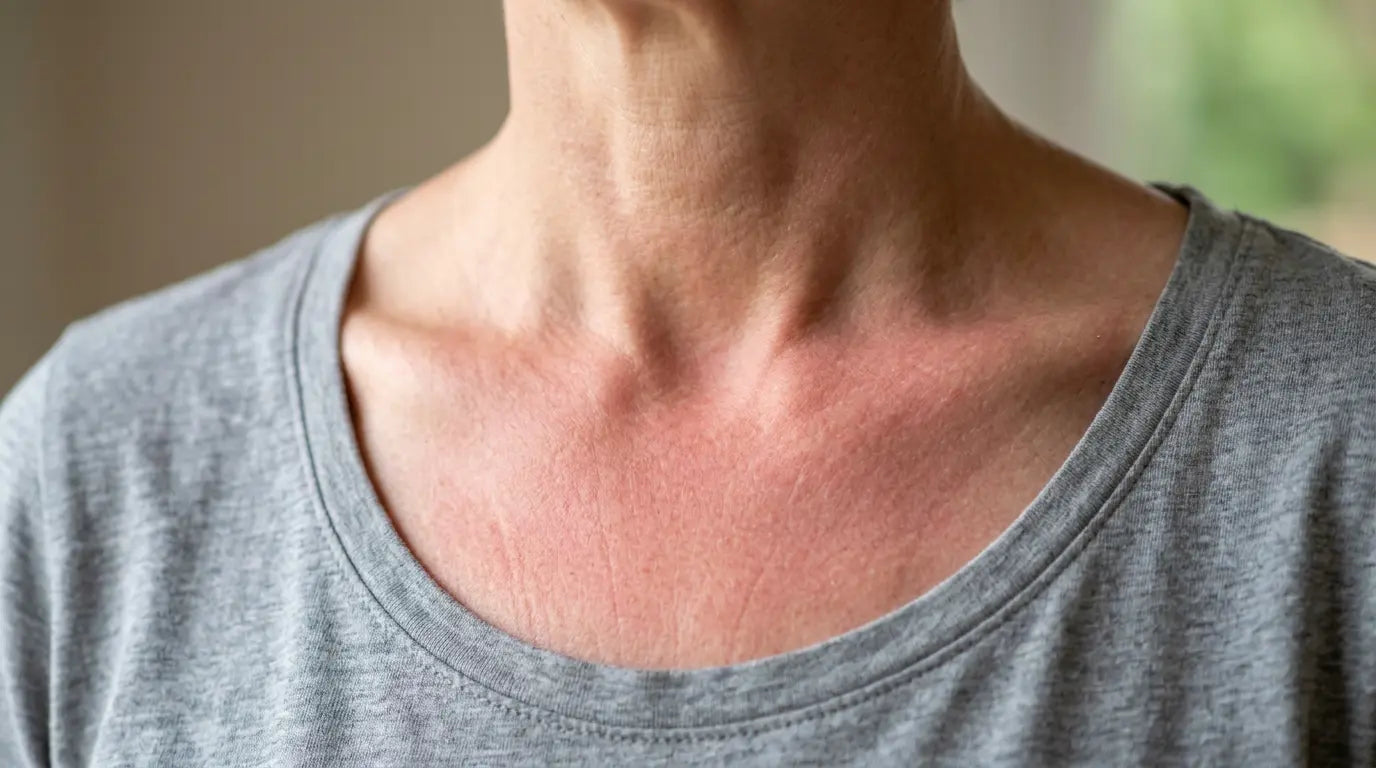
Alcohol intolerance is not the same as simply getting drunk quickly or feeling rough the next day. It is a reproducible physical reaction, meaning it happens consistently, often within minutes of drinking even a small amount.[2] The most recognizable sign is facial flushing, where your face, neck, and chest turn warm and pink or red soon after you drink.[1]
The most common form of alcohol intolerance is inherited. It comes from a genetic difference in an enzyme called aldehyde dehydrogenase 2 (ALDH2). Normally, your body breaks alcohol down into acetaldehyde, and then ALDH2 converts that acetaldehyde into harmless acetate. In people with the less active ALDH2 variant, acetaldehyde builds up in the blood and tissues, and that buildup is what produces the symptoms.[1]
Alcohol intolerance symptoms
Symptoms typically appear within minutes of drinking. The most commonly reported ones include:[1][2]
- Facial flushing (warm, pink or red skin on the face, neck, and chest)
- Stuffy or runny nose
- Rapid heartbeat or palpitations
- Headache
- Nausea and sometimes vomiting
- Red, itchy skin bumps (hives)
- Low blood pressure
- Worsening of preexisting asthma
How intense these are varies from person to person, and often depends on how much you drank and which type of drink you chose. For many people it feels like a sudden warmth or flush, a stuffy head, and a racing heart coming on fast after just a drink or two. The symptoms usually last from about 30 minutes to a few hours, easing as your body clears the alcohol, though a headache can sometimes linger longer.
What causes alcohol intolerance? The four main reasons
Alcohol intolerance is a catch-all term for several different underlying causes. Often more than one is at play at once.[3]
1. ALDH2 enzyme deficiency (genetic)
This is the classic, inherited form. A less active ALDH2 enzyme means acetaldehyde accumulates when you drink. It is most common in people of East Asian descent, though the underlying biology can occur in anyone.[1] You can read more in our guide to why your face turns red when you drink.
2. Histamine sensitivity
Alcoholic drinks, especially red wine and beer, naturally contain histamines, the same compounds involved in allergy symptoms. Some people do not break histamine down efficiently, so drinking triggers congestion, flushing, and headache.[3]
3. Sulfite sensitivity
Sulfites are preservatives added to most wine and some beer. Sensitivity to them mostly affects people with asthma and tends to trigger respiratory symptoms like wheezing and chest tightness.[2]
4. A reaction to another ingredient
Sometimes the reaction is not to the alcohol at all, but to a grain, preservative, or other ingredient in the beverage. Common triggers include grapes, wheat, and rye.[2]
Can you develop alcohol intolerance suddenly or later in life?
Yes. While the genetic ALDH2 form is present from birth, other causes can develop over time, which is why some people find they suddenly cannot tolerate alcohol the way they used to.[3] Common reasons for new or sudden onset include:
- Certain medications. Some drugs, including the antibiotics metronidazole and isoniazid, interfere with the enzymes that process alcohol and can turn a previously comfortable drinker into someone who flushes after half a drink.[3]
- Developing histamine or sulfite sensitivity. Unlike the genetic form, these sensitivities can expand over time.[4]
- Underlying health changes. Conditions such as liver issues or chronic nasal inflammation can affect how your body handles alcohol and its byproducts.[3]
Alcohol intolerance vs alcohol allergy: what is the difference?
People often use these terms interchangeably, but they are different conditions, and the distinction matters.[1]
Alcohol intolerance is a metabolic issue. Your body struggles to break down alcohol or one of its ingredients, producing uncomfortable but generally not dangerous symptoms like flushing and congestion.
An alcohol allergy is an immune-system reaction, and true alcohol allergies are rare. When they occur, they can be more serious, so it is a meaningful distinction. That said, most reactions people call an allergy are actually an intolerance, either to alcohol itself or to an ingredient like sulfites, grains, or histamine.[5]
How is alcohol intolerance diagnosed?
If you want a clear answer, a few tests can identify it. It usually starts with a look at your symptoms and which drinks trigger them. From there, a couple of tests may be used:[1][6]
- Ethanol patch test. A provider places a drop of ethanol on a gauze pad, tapes it to your arm for several minutes, then checks for redness, itching, or swelling.[1]
- Blood test. A blood test can look for allergy-type antibodies (immunoglobulin E) if a true allergy is suspected. These tests are not always accurate, so they are interpreted alongside your history.[6]
Genetic testing can also identify the ALDH2 variant, and many people discover they carry it only after a direct-to-consumer DNA test.[3]
Can alcohol intolerance be fixed or go away?
Here is the honest answer: the inherited ALDH2 form is genetic, so it cannot be cured, and there is no way to change the enzyme you were born with.[6] If your intolerance comes from a medication or a specific ingredient, the picture is different, and removing that trigger may resolve it.
For the genetic form, the most reliable way to avoid symptoms is to drink less or avoid alcohol. Other sensible steps that people find help reduce the severity of a reaction include:
- Identifying your trigger drinks. If red wine reliably sets you off, it may be histamines or sulfites rather than the alcohol alone, and switching to a lower-histamine option like a clear spirit may help.
- Eating before you drink to slow alcohol absorption.
- Pacing yourself and drinking water alongside alcohol.
- Talking to your doctor if you suspect a medication is the cause, or if the reaction is new.
A note on one popular shortcut: some people take antihistamines like Pepcid to mask the flush. This hides the visible reaction without changing the underlying acetaldehyde buildup, and health experts caution against using it to drink more than your body can comfortably handle. We cover this in detail in our alcohol flush reaction guide.
Keep reading
References
- Cleveland Clinic. "Alcohol Intolerance: Symptoms, Tests and Alcohol Allergy." ALDH2 mechanism, symptoms, and ethanol patch test. my.clevelandclinic.org
- Mayo Clinic. "Alcohol intolerance: Symptoms and causes." Symptoms, triggers, and the allergy distinction. mayoclinic.org
- Mulla A, et al. "Metronidazole and alcohol." Peer-reviewed review of medication-alcohol interactions and acetaldehyde. National Library of Medicine (PMC). ncbi.nlm.nih.gov
- Texas Health Resources. "Can Alcohol Make Your Allergy Symptoms Worse?" Histamine, DAO enzyme, and intolerance vs allergy. texashealth.org
- WebMD. "Alcohol Allergy." Allergy symptoms and the intolerance-versus-allergy distinction. webmd.com
- Mayo Clinic. "Alcohol intolerance: Diagnosis and treatment." Blood test, antihistamines, and management. mayoclinic.org