

IV Therapy for Hangover: What It Is and How It Helps You Recover
When you wake up with severe hangover symptoms and the usual solutions don’t seem to be working, it’s unpleasant enough to make you seek out more drastic remedies. One of them—and one that’s been gaining popularity in recent years—is IV hydration. Some people even call IV therapy for hangovers the most effective hangover remedy they’ve ever tried.
But how does it work, and is it worth the risks and high cost? Read on for an evidence-based overview of what IV therapy has to offer and why you might want to skip it.
What Is IV Therapy?
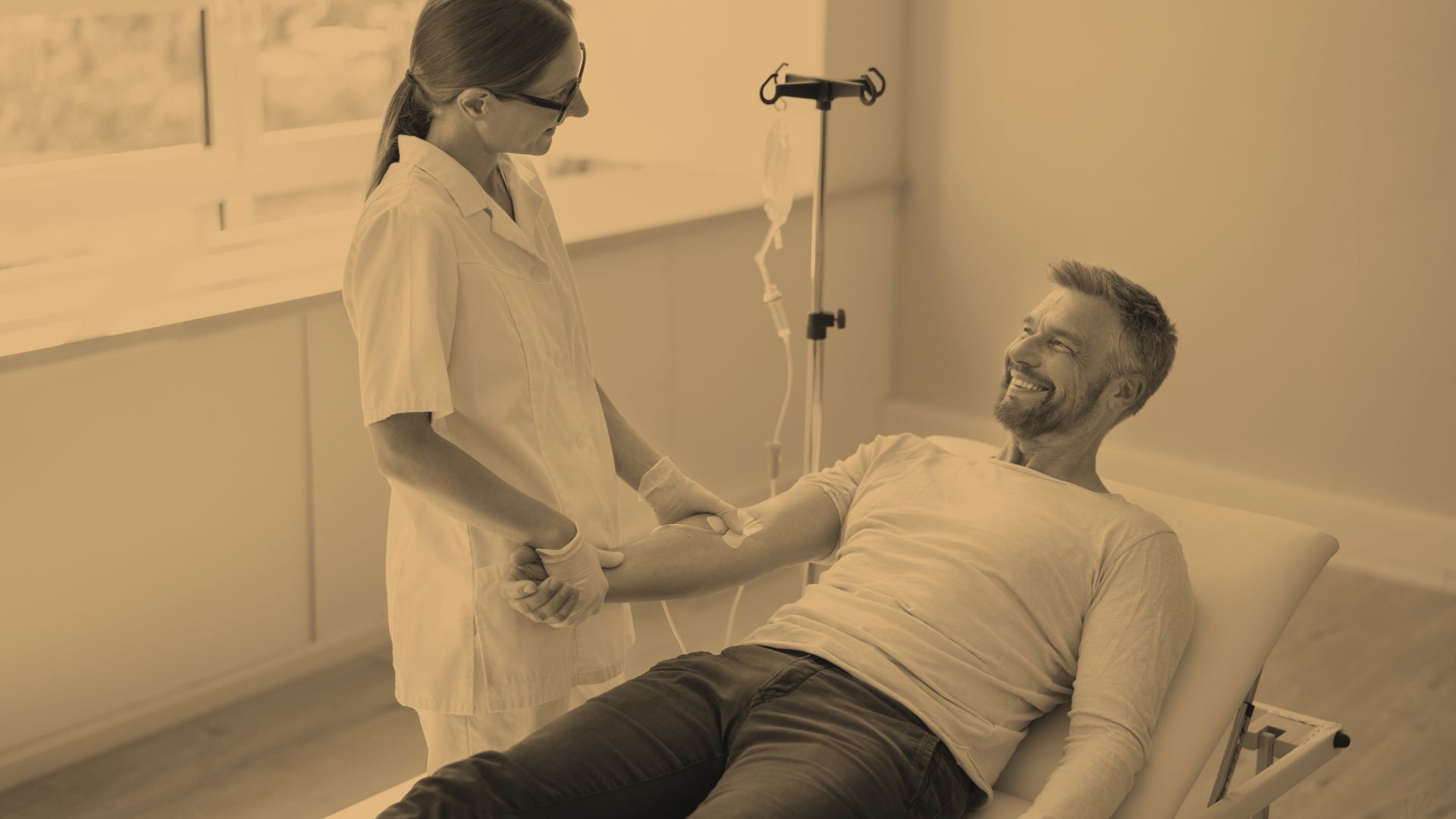
IV therapy for hangovers involves delivering fluids, electrolytes, vitamins (e.g., vitamin C, B-complex), and sometimes anti-nausea or pain medications directly into the bloodstream. A trained professional, like a nurse, must be present to insert the IV into your vein and begin the infusion.
How Can IV Therapy Help You Recover?
By sending fluids, electrolytes, vitamins, and medications directly into the bloodstream—more rapidly than any supplement taken by mouth—IV infusions can work faster than more accessible alternatives. This means that an IV can provide relief within two to four hours.
Does IV Therapy Work for Hangovers?
According to Sandy Wang, MD, MPH at University of Rochester Medical Center, the answer to this question is “maybe.” However, she also warns that “IV fluids are not always needed. In fact, it is not recommended to give IV fluids unless a patient cannot keep anything down, especially water.”
Similarly, Cristina Ignacio, MD of Hackensack Meridian Health notes that “rehydrating with IV fluids won’t cure a hangover, because dehydration is only one symptom.” She goes on to point out that even an IV treatment with added electrolytes and vitamins can’t address all hangover symptoms (e.g., headache, nausea, trouble concentrating, etc.). Dr. Ignacio adds that IV fluids can’t help your liver break down the alcohol in your system any faster, either.
Like Dr. Wang and Dr. Ignacio, most doctors would not recommend IV therapy for hangovers due to the associated risks (more on this in the next section).
Unfortunately, although there’s an abundance of anecdotal evidence from people who say IV therapy relieved their hangovers, there’s not much scientific data to back up these assertions. For example, in one study, administering IV saline for acute alcohol intoxication in the ER did not help patients wake up sooner or spend less time in the hospital.
As Dr. Abdulrahman Alangari of the Riyadh Armed Forces Hospital describes the body (or lack thereof) of scientific evidence supporting IV therapy: “Despite claims that IV therapy can enhance energy, boost immunity, or improve skin health, these purported benefits are primarily anecdotal or based on self-reported outcomes rather than well-designed randomized clinical trials.”
Drawbacks of IV Therapy
Dealing With Needles
There’s no way around it: until the technology develops further, getting an IV inserted will always require you to be poked with a needle. If you’ve been told that your veins are hard to find or you’re uncomfortable with needles, this can be a particularly unpleasant experience.
Health Risks
All IVs carry some risk of infection. At wellness spas and mobile home services, adherence to sterility protocols might be imperfect, which increases the risk of infection. Additional risks of IV therapy include thrombophlebitis, air embolisms, vein damage/collapse, and other concerning health outcomes.
Expensive
Since health insurance doesn’t cover IV hangover treatments, they’ll typically cost you between $100 and $500 per session. A basic hydration drip will be on the lower end, while the addition of vitamins and antioxidants like glutathione can raise the price by several hundred dollars.
Support Your Recovery With PREGAME
Capsulyte’s PREGAME is formulated with evidence-based ingredients like antioxidant Clovinol®, anti-inflammatory DHM, NAC, and liver-protective Siliphos®.
PREGAME costs $3.57 per dose, making it not only lower-risk than IV therapy, but also much more affordable.
Visit the Capsulyte blog to find even more scientific suggestions for recovering from post-drinking symptoms!
Frequently Asked Questions
Read more

10 Best Protein Foods for Hangover Relief and Recovery
Protein can be beneficial after a night of drinking, as it helps stabilize blood sugar (which is prone to dropping after alcohol consumption) and supports liver function as you recover fro...
Read more
Medications To Help Stop Drinking Alcohol: What You Need To Know
Quitting alcohol can be incredibly difficult. This is especially true because long-term drinking alters the brain’s reward and stress systems, which can lead to withdrawal symptoms and powerful urg...
Read more