

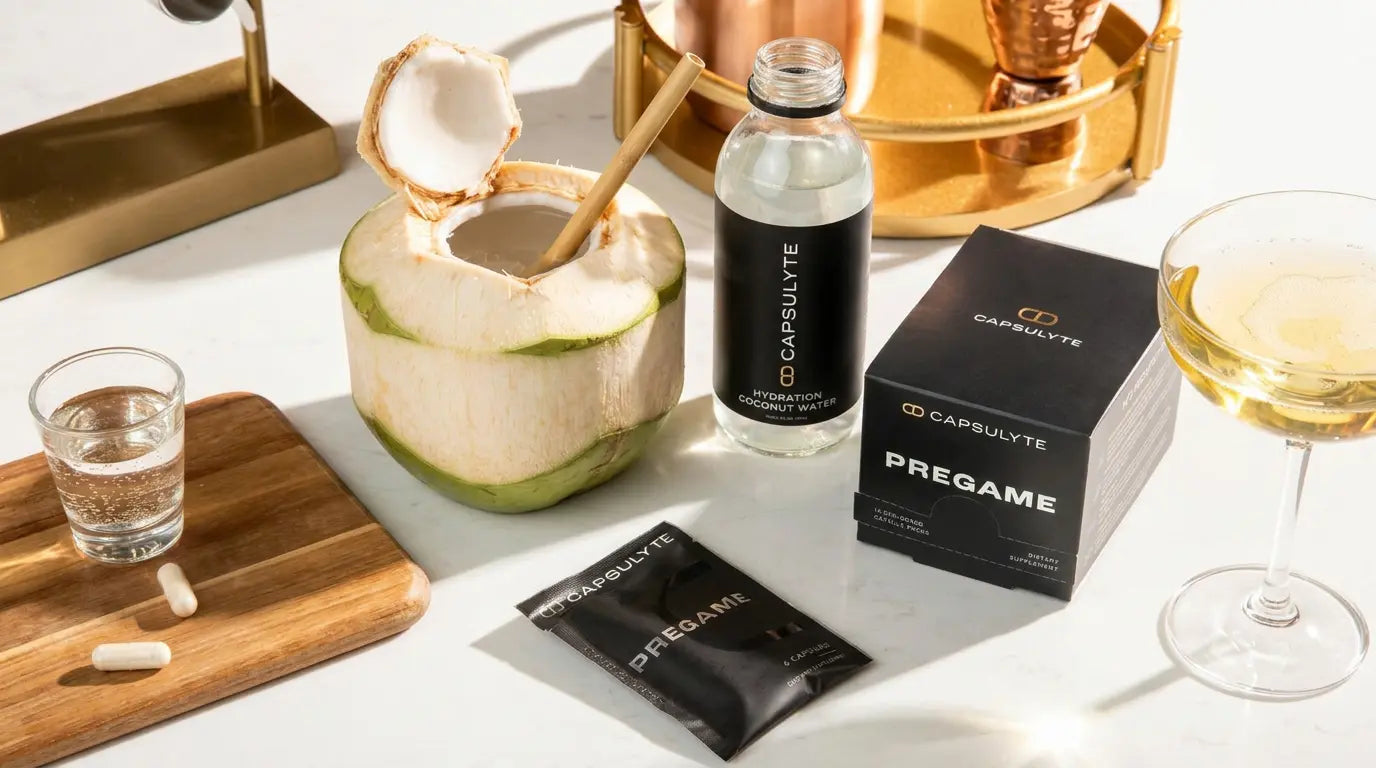
Does Coconut Water Help Hangovers? What Science Actually Says
You've probably seen this advice everywhere: "Drink coconut water for your hangover." It shows up in wellness articles, Reddit threads, and well-meaning texts from friends. And there's a reason — coconut water does contain natural electrolytes that can support rehydration after a night of drinking.
But does coconut water actually help a hangover, or is it just another overhyped remedy? The short answer: it can help with some hangover symptoms, but it doesn't address everything that's making you feel awful. Here's what the science says.
Quick Answer: Does Coconut Water Help Hangovers?
Coconut water may help relieve dehydration-related hangover symptoms like thirst, headaches, dizziness, and fatigue by replenishing electrolytes. However, dehydration is only one of several causes of hangovers. Coconut water does not address acetaldehyde toxicity, GABA rebound, inflammation, or oxidative stress — which are responsible for many of the worst hangover symptoms like nausea, anxiety, and brain fog.
Why Do People Recommend Coconut Water for Hangovers?
Coconut water has a few things going for it as a hangover drink:
Natural electrolytes. Coconut water contains potassium, sodium, magnesium, and calcium — the same minerals your body loses when alcohol's diuretic effect increases urine production. A single cup of coconut water provides roughly 600mg of potassium, which is significantly more than most sports drinks.
Easy on the stomach. When you're nauseous, the thought of eating or drinking anything heavy is miserable. Coconut water is light, mildly sweet, and generally well-tolerated — even on a sensitive stomach.
Better hydration than plain water. Because coconut water contains electrolytes, it may support fluid absorption more effectively than water alone. The sodium and potassium help your body actually retain the fluid rather than just passing it through.
No artificial ingredients. Unlike many sports drinks that are loaded with added sugars, artificial colors, and flavoring, plain coconut water is a relatively clean source of hydration.
Coconut Water vs. Sports Drinks vs. Plain Water
Not all hydration is equal when you're recovering from drinking. Here's how they compare:
Coconut water is highest in potassium (roughly 600mg per cup) but lower in sodium (about 250mg). It has natural sugars but no artificial additives. Best for: overall electrolyte replenishment and gentle rehydration.
Sports drinks (Gatorade, Powerade) are higher in sodium but contain added sugars, artificial colors, and flavoring. They were designed for athletic performance, not hangover recovery. Best for: sodium replacement specifically.
Plain water has no electrolytes, but it's still effective for basic rehydration. If dehydration isn't severe, water may be all you need. Best for: mild hangovers and general hydration.
Oral rehydration solutions (Pedialyte, Liquid IV) have a precise balance of sodium, potassium, and glucose optimized for fluid absorption. They're more effective than any of the above for serious dehydration. Best for: severe dehydration symptoms.
For most hangovers, coconut water is a solid choice — but the honest truth is that the hydration source matters less than most people think. That's because dehydration is only part of the problem.
What Coconut Water Can't Fix
Here's where the "coconut water cures hangovers" advice falls short. Hangovers are caused by multiple biological mechanisms happening at once, and dehydration is just one of them:
Acetaldehyde buildup. When your liver breaks down alcohol, it produces acetaldehyde — a toxic compound that's even more harmful than alcohol itself. Acetaldehyde is responsible for many hangover symptoms including nausea, headaches, and fatigue. Coconut water does nothing to speed up acetaldehyde breakdown.
GABA rebound. Alcohol enhances the calming neurotransmitter GABA while suppressing the excitatory neurotransmitter glutamate. When alcohol wears off, your brain overcorrects — glutamate surges and GABA drops. This rebound is what causes hangover anxiety (commonly called "hangxiety"), restlessness, and sleep disruption. No amount of coconut water addresses this.
Inflammation and oxidative stress. Alcohol triggers an inflammatory response throughout the body and generates free radicals that damage cells. This contributes to the overall feeling of being unwell, body aches, and brain fog. Coconut water has minimal anti-inflammatory or antioxidant properties.
Blood sugar disruption. Alcohol can interfere with glucose production, leading to low blood sugar that worsens fatigue, weakness, and mood disturbances. While coconut water contains some natural sugars, it's not specifically designed to stabilize blood sugar.
This is why people who drink coconut water after a big night often feel slightly better but still far from normal. The hydration helps, but the other three or four mechanisms are still running unchecked.
How to Use Coconut Water for Hangovers
If you're going to use coconut water as part of your hangover strategy, timing and quantity matter:
Before bed: Drink 8–16 ounces of coconut water before you go to sleep after drinking. This is actually more effective than drinking it the next morning, because it gives your body a head start on rehydration while you sleep.
The morning after: Drink another 8–16 ounces when you wake up, ideally before coffee. Caffeine is a mild diuretic and can make dehydration worse if you haven't rehydrated first.
Pair it with food: Have coconut water alongside a bland, easy-to-digest meal — toast, bananas, eggs, or oatmeal. The combination of fluids, electrolytes, and food is more effective than any one of these alone.
Don't overdo it. Coconut water is high in potassium, and drinking excessive amounts can cause digestive discomfort. Two to three cups throughout the day is plenty.
A Smarter Approach: Address All Four Causes
Coconut water is a good start — it handles the hydration piece genuinely well. But if you want to address the full picture of what causes a hangover, you need to cover the other mechanisms too.
Capsulyte's PREGAME, formulated by Dr. Dan Nguyen, MD, MBA, is designed to be taken before drinking and targets the causes that coconut water can't reach:
- NAC (N-Acetyl Cysteine) supports glutathione production, which helps break down acetaldehyde — the toxic byproduct that coconut water doesn't touch
- DHM (Dihydromyricetin) is an antioxidant and anti-inflammatory that may support GABA receptor function and reduce oxidative stress
- Clovinol® is a clove-derived polyphenol that may reduce negative post-drinking feelings by about 55 percent
- Siliphos® is a bioavailable form of milk thistle that may support liver health during alcohol metabolism
The combination of coconut water for hydration and a targeted pre-drinking supplement for everything else is a more complete approach than relying on any single remedy.
Frequently Asked Questions
Read more

The Ultimate Bachelorette Hangover Kit: What to Include
Planning a bachelorette weekend? Between the bottomless brunches, late-night bar crawls, and "just one more round" moments, multi-day celebrations can take a serious toll on the crew. That's where ...
Read more
Why Does My Face Turn Red When I Drink? Alcohol Flush Reaction Explained
You have one glass of wine and your cheeks go red. Your face feels warm, your heart beats a little faster, and maybe you get a headache or feel slightly queasy. If this sounds familiar, you are e...
Read more